Brooklyn Heights' density means most stinging-insect calls here are building-nest calls, not yard-nest calls — the neighbourhood is landmarked brownstones and row houses, not detached homes with lawns. Wasps and yellow jackets look for the same kind of gap that lets ants and rodents in: settled cornice work, old window frames, and masonry cracks in 19th-century construction.
A nest tucked into a brownstone cornice or behind old window trim is often out of sight until traffic to and from the opening becomes noticeable, so we check the building's exterior detailing carefully rather than assuming a ground-level yard search will find it.
We treat the nest directly with the right approach for the species — wasps, yellow jackets, or hornets each require a different method — using full protective equipment.
Stinging insects around a NYC home: how do you tell them apart and remove them safely?
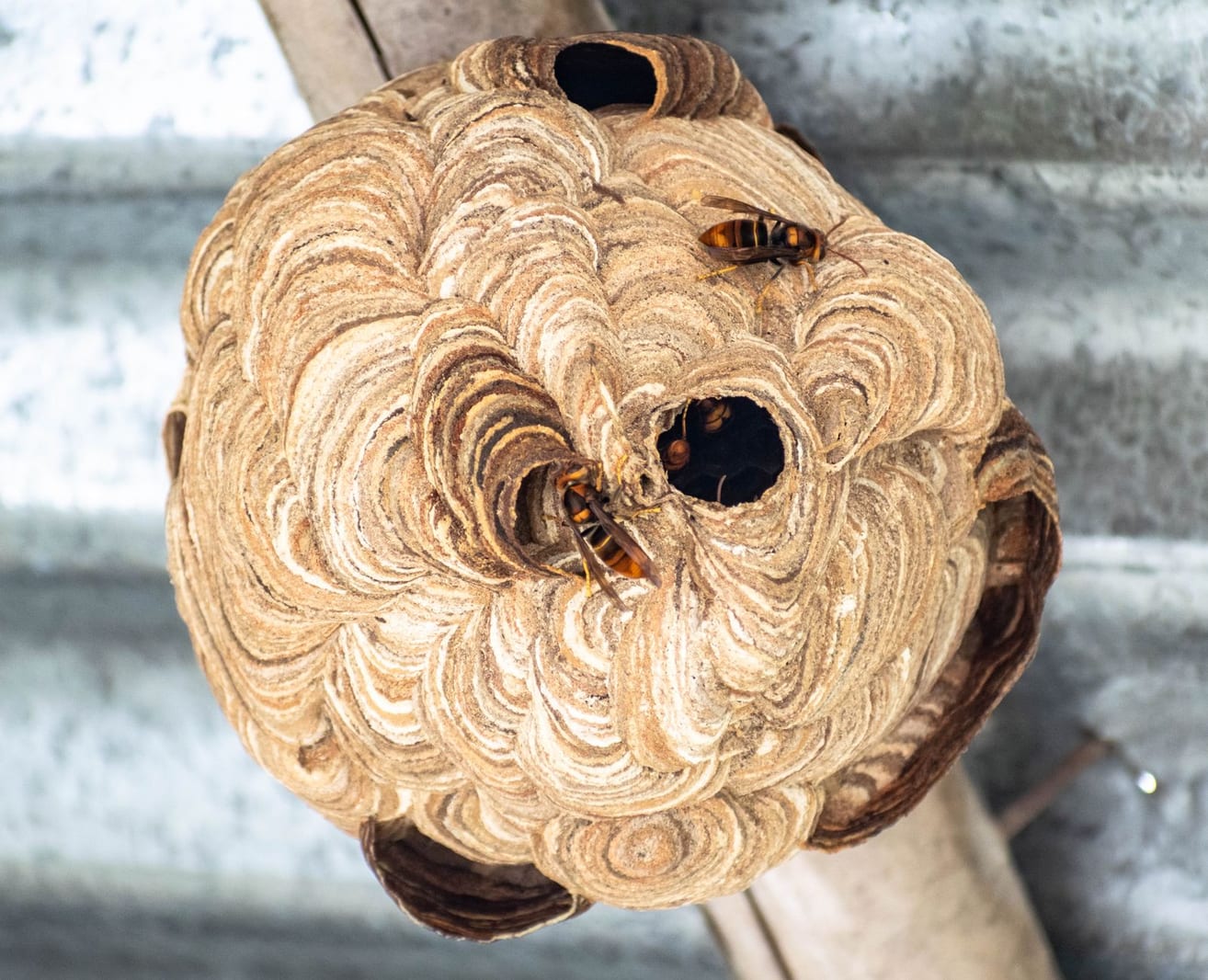
UC IPM notes that a yellowjacket nest is enclosed by a paper envelope with a single entrance hole and is often built in protected cavities such as voids in walls and ceilings, whereas a paper wasp nest hangs like an open umbrella from a stalk with its cells visible from beneath, typically under eaves or in attics — so the nest shape tells you which insect you are dealing with. (UC IPM — Yellowjackets and Other Social Wasps)
Per UC IPM, only about one to two people per 1,000 are allergic or hypersensitive to bee or wasp stings, but for those people a sting can trigger life-threatening reactions such as shock, dizziness, difficulty breathing or throat swelling that blocks the airway — all of which require immediate medical care. For most people stings are painful rather than dangerous. (UC IPM — Bee and Wasp Stings)
CDC/NIOSH advises that while most insect stings cause only minor discomfort, some produce severe allergic reactions that require immediate medical care and can be fatal, and that anyone with a history of severe reactions should carry an epinephrine autoinjector and wear medical-ID jewellery. This is why a nest by a doorway or high-traffic area is treated as urgent. (CDC/NIOSH — Insects and Scorpions)
Not every stinging insect should be exterminated. Penn State Extension explains that honey bees play a major role in pollinating agricultural crops, and that a honey bee swarm is docile enough for a beekeeper to shake into a box and relocate to a hive — which is why a reputable service identifies honey bees and arranges relocation rather than killing them. (Penn State Extension — Honey Bee Management)
Yellowjacket vs paper wasp vs hornet vs honey bee
| Feature | Yellowjacket | Paper wasp | Hornet | Honey bee |
|---|---|---|---|---|
| Body | Short waist, bright black-and-yellow, near-hairless | Slender body, long dangling legs, distinct waist | Larger social wasp, black with white/pale markings | Rounder, hairy, less brightly striped |
| Nest | Paper envelope, single entrance; ground or wall/ceiling voids | Open umbrella of visible cells on a stalk, under eaves | Large enclosed grey paper envelope, often aerial | Wax comb; a colony in hives or wall voids |
| Temperament | Defends nest vigorously when disturbed | Much less defensive; rarely stings humans | Defends nest aggressively if disturbed | Unlikely to sting unless trapped or stepped on |
| Right response | Treat/remove nest; pro PPE for in-wall voids | Often leave alone unless by a doorway | Treat/remove nest with professional care | Relocate via a beekeeper — do not exterminate |
Signs you have a stinging insect removal problem
- Steady insect traffic in and out of a cornice, window frame, or masonry gap on the building exterior
- A visible nest tucked under eaves or in a brownstone's decorative stonework
- Aggressive stinging insects near an entryway, stoop, or building facade
Why Brooklyn Heights sees this
Brooklyn Heights' landmarked 19th-century brownstones have cornice work, old window frames, and masonry gaps that give stinging insects nesting sites a modern building doesn't have.
Because the neighbourhood is dense row-house construction rather than detached homes with yards, most stinging-insect calls here are building-exterior nests, not ground nests.